Kalpana Datta 1913 — 1995

Chapter 01

Early Life
& Education

Sripur to Chittagong to Calcutta: seventeen years of an unremarkable record, ending in a decision that the rest of her life turned on. This chapter follows the schooling, and the student politics that met her at the other end of it.

1913  —  1931

01 — Childhood and background

A thin record, honestly stated.

Kalpana Datta was born on 27 July 1913 in the village of Sripur, in the Chittagong district of Bengal. The area lies in what is now Boalkhali Upazila in Bangladesh. Her father, Binod Behari Dattagupta, was a government employee.

That is very nearly the whole of what standard reference sources record about her first sixteen years, and it is worth pausing on the gap rather than filling it. Biographies of revolutionaries are usually written backwards, from the arrest towards the cradle, and the childhood that gets written is often the one that explains the arrest. Anecdotes about early defiance, prophetic remarks and childhood vows attach themselves to famous lives easily and are almost never documented.

What can be said with confidence is structural. A government servant's daughter in Chittagong in the 1910s and 1920s belonged to a small, literate, salaried class in which girls' schooling was possible but not assumed, and in which a family's respectability was closely tied to its standing with the administration. Her later choices were made against that background, not in spite of it.
1929

02 — Education in Chittagong

She matriculated from Chittagong in 1929, and the ordinariness of that is the point.

Matriculation was the examination that closed school and opened the possibility of college. For a girl in a Bengal district town in 1929 it was a real threshold: most did not reach it, and the ones who did were usually the daughters of exactly the professional and clerical families that the colonial education system had been built to produce.

Nothing in the record marks 1929 as political for her. It is simply the year in which she qualified to leave, and the year after which the next decision — where to study, and what — became hers to make.

03 — Moving to Calcutta

Roughly four hundred kilometres, and an entirely different political climate.

Calcutta in 1929 and 1930 was the administrative and intellectual capital of eastern India and the densest concentration of student politics in the subcontinent. Congress organisation, trade union activity, literary societies, student unions and clandestine revolutionary groups all operated in the same few square miles, and often in the same buildings.

A student arriving from a district town did not have to seek politics out. It was in the hostel corridor, the reading room and the tea shop. What varied was how far in a person chose to go, and how quickly.

It was also a city in which the boundary between legal and illegal politics was blurred by design. The colonial state's own emergency powers meant that holding an opinion, attending a meeting and carrying a pamphlet could all be prosecuted. That had a radicalising effect the administration seems not to have anticipated.

She arrived to study science. Within roughly two years she had joined an armed underground organisation four hundred kilometres away, in the district she had come from.

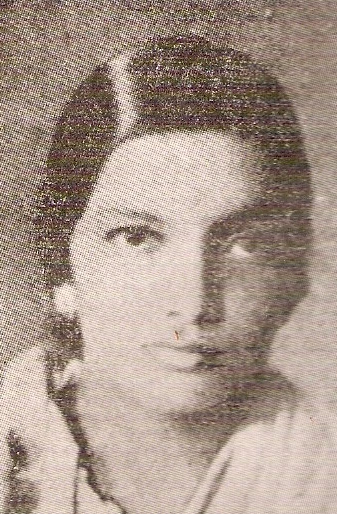
Archival halftone portrait of a young Kalpana Datta, head and shoulders, hair parted and drawn back, looking slightly to her left.
Kalpana Datta as a young woman. Reproduced from a printed halftone. The date is not recorded in the source available to this archive; the image is generally reproduced in accounts of her student and revolutionary years.

04 — Bethune College

A science student at one of the oldest women's colleges in India.

Bethune College traces its origins to the Bethune School, founded in Calcutta in 1849, and stands among the earliest institutions created to give Indian women access to formal higher education. By the time Kalpana Datta enrolled to read science, it had been producing graduates for decades and carried a particular kind of authority: its students were visibly proof that the argument against educating women had already been lost.

Two facts about that student body matter for what followed. Pritilata Waddedar, who took her degree in philosophy at Bethune, and Bina Das, who fired at the Governor of Bengal in February 1932, were part of the same college world. A hostel that gathered ambitious young women from across the province was, incidentally, also an efficient political network.

Her studies were interrupted by her arrest and imprisonment. She completed her degree only in 1940, after her release — eleven years after matriculating.

  • 1849Bethune School founded in Calcutta
  • 1929Kalpana Datta matriculates from Chittagong
  • 1940Graduates from the University of Calcutta

05 — The intellectual environment

What a politically alert student in Calcutta was living inside.

The record does not tell us what Kalpana Datta read, argued about or believed as a first-year student. It does tell us, in some detail, what surrounded her. These are conditions, not claims about her.

i

A tradition already fifty years old

Bengal's revolutionary societies did not begin in 1930. Their organisational memory, methods and arguments reached back through the swadeshi years after the 1905 partition of the province. A student entering that world was entering something with a history, a literature and its own internal disputes.

ii

Two competing answers to the same question

Mass civil disobedience and armed revolutionary action were both live options in 1930, pursued by people who broadly agreed about the goal and disagreed sharply about the means. Students moved between the two, and many held both positions at different points.

iii

Women organising as women

Existing political societies rarely admitted women on equal terms. The response was a parallel structure of women's associations — social, educational, and in some cases directly political — through which a generation acquired the practical experience of running an organisation.

iv

A state that criminalised politics

Preventive detention, press restrictions and emergency ordinances made ordinary political activity legally hazardous. One consequence, visible across the period, was that the line between a student activist and a wanted person could be crossed without any change of intention.

06 — Chhatri Sangha and women's political networks

Chhatri Sangha

Bengali “Women students' association” — described in reference works as a semi-revolutionary organisation for women in Calcutta.

The Chhatri Sangha is the hinge of this chapter. Reference sources record that Kalpana Datta joined it, and that Bina Das and Pritilata Waddedar were active in it. It is the documented point at which three separate lives are known to have run through the same room.

It should not be described as a front organisation or a recruiting office; the sources do not support that, and its members' later paths diverged sharply. What it plainly was, is a place where young women organised themselves without waiting for permission, and where the ordinary business of political life — meetings, argument, membership, trust — became available to them.

Recruitment into armed work happened through personal networks, not advertisements. An association of committed, capable, already-politicised women was therefore where such networks naturally touched.

  • 1911 – 1986

    Bina Das

    Fired at Governor Stanley Jackson at the Calcutta convocation, 6 February 1932. Nine years' rigorous imprisonment; released April 1939.

  • 1911 – 1932

    Pritilata Waddedar

    Philosophy graduate of Bethune College and school headmistress. Led the Pahartali European Club attack, 24 September 1932.

  • 1913 – 1995

    Kalpana Datta

    Science student. Joined Surya Sen's group in May 1931. Sentenced to transportation for life in 1933; released 1939.

Accounts of the Chhatri Sangha vary in how directly they connect it to armed organisation. The description here follows the wording used in standard reference entries and does not go beyond it.

07 — From student to revolutionary

How the crossing actually happened.

  1. 18 April 1930

    Chittagong acts, and she is not there

    The armoury raid takes place in her home district while she is seventeen and studying in Calcutta. She has no recorded part in it. What it does produce is a case, a manhunt, and a set of prisoners.

  2. 1930 – 1931

    Contact with the prisoners

    Accounts of this period describe her visiting arrested revolutionaries in disguise. Prison visiting was one of the few forms of contact the state could not entirely close, and it was a common route by which sympathisers became participants.

  3. May 1931

    She joins

    She enters Surya Sen's organisation — the Indian Republican Army, Chittagong Branch. This is the documented turning point of her life, and it is dated.

  4. 1931 – 1932

    Assigned work

    Reference accounts describe her carrying explosive material from Calcutta, preparing gun-cotton, and training in revolver shooting with Pritilata Waddedar. Skilled, technical, dangerous work — and the reason her later sentence was as heavy as it was.

Nothing in the sources describes a single moment of conversion. What they describe is a sequence of decisions, each one slightly harder to reverse than the last.

Chapter 02 — The Chittagong Revolution