The chronology
1913 1995
Every entry below is dated, and every date is one that reference sources agree on. Where an event belongs to the history around her rather than to her own actions, it is marked as context. Where sources disagree, the disagreement is stated instead of resolved.
- Her own life
- Historical context
-
Born at Sripur, Chittagong district
27 July 1913
Born in the village of Sripur in the Chittagong district of Bengal, in what is today Boalkhali Upazila, Bangladesh. Her father, Binod Behari Dattagupta, was a government employee.
-
Matriculates from Chittagong
She completes matriculation and goes on to study science at Bethune College in Calcutta, where she joins the Chhatri Sangha, a women students' association described in reference works as semi-revolutionary.
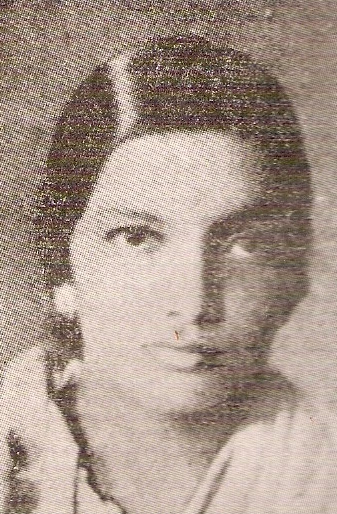
Archival portrait of Kalpana Datta as a young woman. The date is not recorded in the source available to this archive and should not be read as belonging to this year specifically. -
The Chittagong Armoury Raid
18 April 1930 · 22 April 1930
About sixty-five members of the Indian Republican Army, Chittagong Branch, led by Surya Sen, take the police and Auxiliary Force armouries, cut telegraph and telephone lines and disrupt the railway. On 22 April, troops surround the revolutionaries in the Jalalabad hills; twelve revolutionaries are killed.
Kalpana Datta was seventeen and studying in Calcutta. She was not a participant in the raid.
-
Joins Surya Sen's organisation
May 1931
She enters the Indian Republican Army, Chittagong Branch. Reference accounts of her work describe carrying explosive material from Calcutta, secretly preparing gun-cotton, and training in revolver shooting with Pritilata Waddedar.
-
Reconnaissance, arrest, and Pahartali
6 February · September · 24 September 1932
In February, Bina Das fires at the Governor of Bengal at the Calcutta convocation. In September, Kalpana Datta is arrested in male attire while surveying the Pahartali European Club roughly a week before a planned attack; released on bail for want of evidence, she goes underground. Leadership of the operation passes to Pritilata Waddedar, who carries it out on 24 September and dies by cyanide after being wounded.
Some accounts give 17 September for the reconnaissance arrest and the night of 23–24 September for the attack.
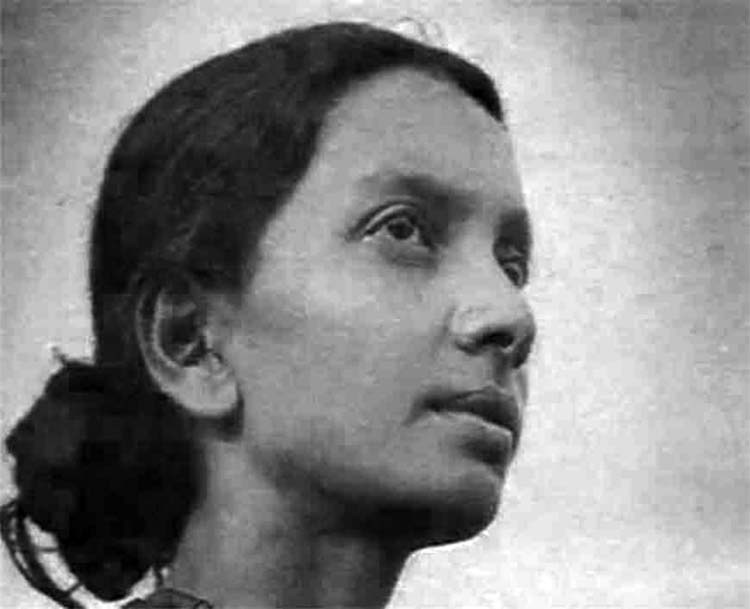
Archival photograph of Kalpana Datta, widely reproduced in accounts of the Chittagong movement. Date and photographer unrecorded in the available source. -
Arrested, tried, sentenced
16 February · 19 May 1933
Surya Sen is arrested on 16 February after being betrayed by a relative. Kalpana Datta is arrested on 19 May, ending roughly eight months underground. She is tried in the second supplementary hearing of the Chittagong Armoury Raid case and sentenced to transportation for life. She is twenty.
-
Surya Sen and Tarakeswar Dastidar are executed
12 January 1934
With its leadership dead or imprisoned, the Chittagong organisation ceases to function as an operating body. The legal case it produced continues through the courts for years.
-
Released
She is released after roughly six years in custody, at twenty-six. Bina Das, sentenced separately in 1932, is released in April of the same year.
Several accounts connect the release to public campaigning for the Chittagong prisoners, including appeals associated with Mahatma Gandhi and Rabindranath Tagore. This archive has not verified those claims against a primary source.
-
Graduates from the University of Calcutta
She completes the degree her arrest had interrupted, eleven years after matriculating, and joins the Communist Party of India. Accounts record her organising peasant and women's fronts in Chittagong in the years that follow.
-
The Bengal famine, and marriage to P. C. Joshi
The Bengal famine of 1943 kills an estimated two to three million people. Reference accounts record her engagement in relief work. In the same year she marries Puran Chand Joshi, then general secretary of the Communist Party of India. They have two sons, Chand and Suraj.
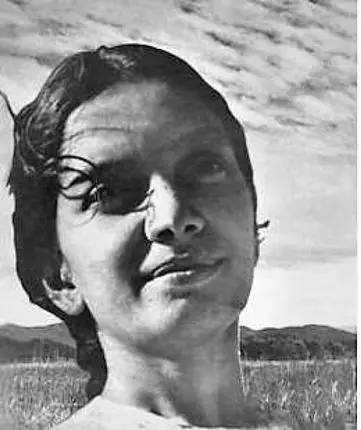
Archival photograph of Kalpana Datta. The date is not recorded in the source available to this archive. -
Chittagong Armoury Raiders: Reminiscences
Her memoir of the Chittagong revolutionaries, written in Bengali, is recorded as appearing in English in 1945, translated with the involvement of Arun Bose and Nikhil Chakraborty. It remains the principal first-person account of the movement by a woman tried in the case.
-
Stands for the Bengal Legislative Assembly
She contests a seat from Chittagong in the 1946 Bengal Legislative Assembly election and is not elected. It is the only recorded instance of her seeking public office.
-
Partition, relief work, and a move to India
Bengal is divided; Chittagong falls in East Pakistan, later Bangladesh. Reference accounts record her relief work through the violence and displacement of Partition, and that she subsequently moved to India and withdrew from active politics.
-
Work at the Indian Statistical Institute
She is employed at the Indian Statistical Institute, the research institution founded by P. C. Mahalanobis in Calcutta, and accounts describe her moving to Delhi in the early 1960s. She remains in that work until retirement.
This entry is placed in the 1960s because that is the decade the sources name for the move; the start and end of her employment are not precisely dated in the references available here.
-
Death
8 February 1995
She dies at eighty-one. The date is consistent across reference sources; the place is not — some give Kolkata, others New Delhi.
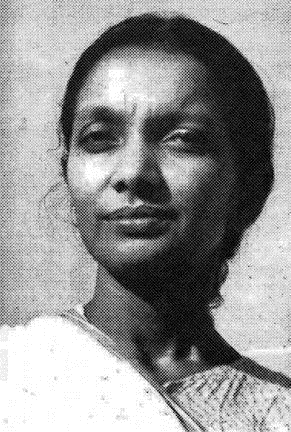
Archival photograph of Kalpana Datta in later life. Date and publication unrecorded in the available source.
About these dates
How this chronology was assembled.
Dates here are drawn from general reference and encyclopaedic sources on Kalpana Datta, the Chittagong Armoury Raid, Surya Sen, Pritilata Waddedar and Bina Das, and were cross-checked between them before being included. Where two sources gave different dates for the same event, both are shown and neither is presented as settled.
No date has been added to this timeline on the strength of a single popular retelling, and no event has been included because it makes a better narrative. If you can point to a primary or governmental source that corrects or extends anything here, please get in touch.