Kalpana Datta 1913 — 1995

Chapter 04 — the longest chapter

Life After Prison

Fifty-six years. A degree, a party card, a marriage, two sons, a famine, a partition, an election lost, a memoir published, and a long working life at a statistical institute. None of it is cinematic. All of it is hers.

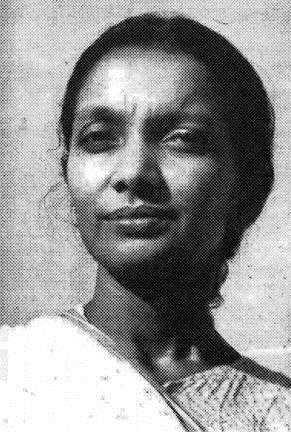
Archival photograph of Kalpana Datta in later life, in a light sari with her hair drawn back, looking directly at the camera.
Kalpana Datta in later life. Reproduced from a printed halftone. The date and original publication are not recorded in the source available to this archive.

1940

01 — Returning to education

The first thing she did with her freedom was finish an examination.

She graduated from the University of Calcutta in 1940, the year after her release. She had matriculated in 1929. Eleven years had passed, of which roughly six had been spent in custody and eight months as a fugitive.

It is a small fact and an unusually revealing one. A person who wanted only to resume revolutionary work would not have spent a year on a degree. A person who wanted only to disappear into private life would not have followed it by joining the Communist Party of India. She did both, in that order, and the sequence suggests someone who intended to be useful over a long period rather than dramatic over a short one.

02 — Political and social engagement

From an underground cell to an open party.

After 1940 her politics changed form completely: from a clandestine armed organisation of a few dozen people to a mass party with newspapers, unions, peasant fronts and elections. The commitment was continuous; the method was not.

1940

The Communist Party of India

She joined the CPI after graduating. The party was then illegal for part of the period and legal for another, and its position on the war and on independence was contested inside the nationalist movement. This archive records her membership; it does not adjudicate the arguments of the time.

1940s

Organising in Chittagong

Reference accounts record her organising kisan (peasant) and women's fronts in the Chittagong district — the ordinary, unglamorous work of building membership, holding meetings and pressing local demands in the same district where she had once been a wanted person.

1943

Marriage to P. C. Joshi

She married Puran Chand Joshi, then general secretary of the Communist Party of India. They had two sons, Chand and Suraj. Chand Joshi (1946–2000) became a journalist.

1946

A contested election

She stood for the Bengal Legislative Assembly from Chittagong in the 1946 election and was not elected. It is the only recorded instance of her seeking public office, and it belongs in the record precisely because it did not succeed.

03 — Bengal in crisis

Between 1943 and 1947 the province she came from broke twice.

The Bengal famine of 1943 is among the largest recorded famines of the twentieth century. Estimates of the death toll commonly range between two and three million people. It was not caused by a failure of rainfall alone; wartime policy, requisitioning, price movements, transport restrictions and administrative decisions all bear on it, and historians continue to weigh them differently.

Four years later, the partition of Bengal in 1947 divided the province along a line drawn in weeks. Chittagong — her district, the district of the raid, the district she had organised in — fell on the eastern side, in what became East Pakistan and is now Bangladesh.

Reference accounts record that she engaged in relief work through both. The detail of that work is not preserved in the sources available here, and the character of it can only be inferred from the scale of what was happening around it.

Famine mortality figures are estimates and are actively debated among historians. The range given is the one most commonly cited in general reference works and is offered as context for the relief work described, not as a precise count.

04 — Relief and public work

The part of a political life that leaves almost no documents.

Relief work in 1943 and 1947 was carried out by party volunteers, student organisations, women's associations and religious bodies simultaneously, often with no central record and no attribution to individuals. That is why this section is short: not because the work was small, but because it was the kind of work that history systematically fails to write down.

What can be said is that she was there, in a province that had lost millions of people and was about to be divided, doing work whose entire purpose was to keep strangers alive. It is a different order of political activity from carrying explosives, and it lasted longer.

Roughly two and a half years of her life have been filmed twice. The four years that followed the famine have not been filmed at all. An observation about the record, not a historical quotation

Memoir

Chittagong Armoury Raiders

Reminiscences

Kalpana Dutt

Written in Bengali. English edition recorded as published in 1945, translated with the involvement of Arun Bose and Nikhil Chakraborty.

05 — Writing and memory

She wrote it down while most of the participants were still alive.

Her memoir of the Chittagong revolutionaries was composed in Bengali and published in English as Chittagong Armoury Raiders: Reminiscences. The English edition is recorded as appearing in 1945 — five years after her release, two years after the famine, two years before Partition, and while the case it describes was still recent enough to be contested.

That timing matters. A participant memoir published within fifteen years of the events, by someone who was tried in the case, is a primary source. It can be read against police records, trial documents and other participants' accounts. It carries the biases any memoir carries — selection, hindsight, loyalty to the dead — and those biases are themselves evidence about how the movement understood itself.

It also means that when a film, a novel or a website describes the Chittagong uprising, there exists a text by one of the people who was actually charged in it. Very few episodes in this history are so well-served.

Books & further reading

06 — A life beyond the headlines

After 1947 the record thins, and that is part of the story.

Reference accounts record that after Partition she moved to India and withdrew from active politics. The reasons are not documented in the sources available here, and a great many people made comparable decisions in the same years for a great many reasons.

What follows is nearly five decades in which almost nothing is written down. There is no scandal in that. It is what happens to most people, and it happens especially reliably to women whose public significance has already been assigned to a single earlier episode.

The visible thread is work. She was employed at the Indian Statistical Institute, the research institution founded by P. C. Mahalanobis in Calcutta, and accounts describe her moving to Delhi in the early 1960s. She remained there until retirement.

A former life prisoner spending decades in a statistical research institution is not the ending a screenplay would choose. It is, however, what the record describes, and it deserves to be stated as plainly as the rest.

07 — Work and later years

8 February 1995

She died at eighty-one.

The date is consistent across reference sources. The place is not: some records give Kolkata and others New Delhi. This archive states both rather than choosing between them.

She had been born in a British province that no longer existed, in a village that is now in another country, under a legal system that had sentenced her to transportation for life. She outlived the empire by forty-eight years.